


Jul 1, 2026 | Today, we are welcoming a new Ph.D. student, Lakshmi Prasad S to our lab. She will work on the ANR Project ‘Structure‘.
Apr 4, 2026 | Conference Announcement | GEM-APPICOM 2026 – At The Confluence of Membrane Sciences

We are excited to announce the XXIV GEM and 7th APPICOM joint meeting, taking place Nov 3-6, 2026, at the beautiful Domaine Saint-Joseph in Sainte-Foy-lès-Lyon, France. This international conference will bring together scientists from biology, biochemistry, biophysics, chemistry, and physics to discuss the latest advances in membrane science and biomemembranes.
Conference Topics:
• Membrane Mechanics & Remodeling
• Structure and Dynamics of Membrane Proteins
• Chemical & Biophysical Tools
• Interactions with Membranes
• Lipid Organization and Dynamics
• Membranes at Interfaces
• Theoretical & Computational Approaches
Registration and abstract submission will open soon.
Full details on the conference website.
This conference is organized by:
Groupe d’Études des Membranes (GEM)
GDR Appicom – APProche Intégrative pour une COmpréhension multi-échelle des protéines de Membrane
SIBPA – Società Italiana di Biofisica Pura e Applicata
Local Organizing Committee:
Léo Corne • Claire Loison • Carlos Marques • Luca Monticelli • Cedric Orelle • Lucien Roach • Sifre van Teeffelen
Mar 3, 2026 | New Publication!
I am pleased to announce the publication of photothermal reshaping and cavity formation in silica-coated gold nanorods using nanosecond pulsed lasers in Physical Chemistry Chemical Physics, on which I am a co-author. This study investigates the complex dynamics of nanoparticle morphology under intense optical excitation.
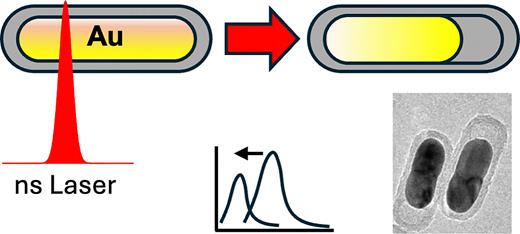
In this work, it was demonstrated how controlled photothermal effects can be used to induce structural changes in metallic and dielectric nanostructures, leading to the formation of internal cavities. Our analysis reveals the physical mechanisms driving this reshaping, particularly the role of heat dissipation and optical resonance in guiding the localised material modification. By understanding these transient processes, we establish a new method for tailoring the geometry and internal structure of nanoparticles, which provides critical flexibility for designing high-performance photonic components.
It was a privilege to contribute the simulation to this research, and I am grateful to the others authors to have included me in such an interesting project.
Jan 19, 2026 | New publication!
I am pleased to announce the publication of our latest research in Advanced Optical Materials, titled ‘Directional Light Scattering in Mie-Resonant Si Particles with Ultra-Thin Au Shells‘
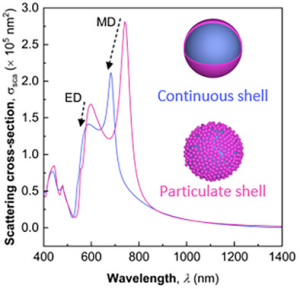
This study investigates the optical behaviour of silicon (Si) core-shell nanoparticles decorated with ultra-thin gold (Au) shells. By meticulously examining the role of shell architecture, comparing continuous versus particulate coatings, and varying shell dimensions, our team has uncovered critical insights into how these structures manipulate light at the nanoscale.
We demonstrate that the hybridised modes often attributed to these systems do not exist in particulate gold shells and are exclusive to continuous plasmonic shells. Furthermore, our results reveal that these core-shell particles exhibit a dampened magnetic dipole resonance for smaller Si core diameters, while showing an enhanced resonance for larger Si core sizes. The study underscores the necessity of high-fidelity modelling when designing nanomaterial architectures, supported by comprehensive simulations and Mie theory calculations.
This work provides a foundational understanding of the light-scattering properties of Si@Au core-shell particles, offering valuable guidance for the design of future photonic devices.
This work was made possible through the dedication and expertise of all our co-authors, whose collaborative efforts across the synthesis, simulation, and optical characterisation stages were essential to bringing this complex study to fruition.
Congratulations to Emmanuel on the first experimental research article from his Ph.D!
Sep 8, 2025 | RSC Chemical Nanoscience & Nanotechnology ECR Symposium
I will give an invited presentation to the RSC Chemical Nanoscience & Nanotechnology ECR Symposium on our recent work investigating directional light scattering from Mie resonant Si particles with ultrathin Au shells.
Sep 1, 2025 | Today, we are welcoming a new post-doc, Ons El Atti to our lab. She will work on the synthesis of metal oxide core-shell particles for optical applications.
Jul 21, 2025 | Talk at META 2025
I will be giving an invited talk at META 2025 in Torremolinos on Wednesday presenting our work developing Si@Au core-shell particles as potential meta-atoms.
July 10, 2025 | New Article!
I am pleased to announce the publication of our latest research in Small Methods, titled Self-Assembled Silicon@Silica Metasurfaces with High-Quality Resonances in the Infrared. This work addresses the challenge of creating high-performance photonic devices using bottom-up manufacturing techniques.
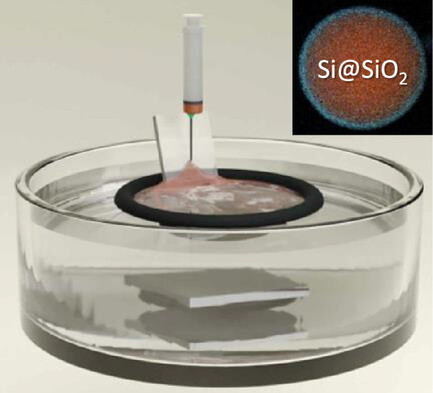
While 2D assemblies of resonant dielectric particles are highly promising for next-generation photonics due to their low optical losses and intense electromagnetic responses, bottom-up synthesis has historically been hindered by issues like positional disorder and size dispersion. Our study presents a new approach: the fabrication of core–shell silicon@silica particles that exhibit multipolar resonances in the visible and near-infrared spectra. By assembling these particles at an air–water interface, we successfully created semi-ordered arrays. Our characterisation reveals that these materials display a magnetic resonance with a high-quality factor in the infrared (near 945 nm). This marks a significant milestone as one of the first bottom-up synthesis methods capable of generating optical magnetism, paving the way for more scalable production of high-performance metasurfaces.
I wish to thank all our co-authors for their invaluable expertise and efforts throughout the study.
https://doi.org/10.1002/smsc.202500119
Jul 21, 2025 | Presentation at Gold 2025
I will present our research on Si@Au core-shells at the upcoming Gold 2025 conference in San Sebastián on Tuesday. Hope to see you there!
May 3, 2025 | CECAM workshop on Crystallization and Self-Assembly
I will give an invited talk at the upcoming CECAM workshop, Crystallization and Self-Assembly: from Soft Matter to Pharmaceuticals to Biomineralisation, held in Roscoff, France. I will present a review of recent advances in our understanding of diatom biomineralisation and morphogenesis.
Mar 3, 2025 | Upcoming Conference Talk at HyMa 2025
I will be presenting our research at the 8th International Conference on Multifunctional, Hybrid and Nanomaterials (HyMa), taking place in Montpellier, France. I will present our recent works on creating meta-atoms based on Si@Au core-shells. Hope to see you there!
Feb 28, 2025 | New Publication!
I am pleased to share a recent publication in Inorganic Chemistry, titled Crystallization of Manganese(V) Oxides by Hydroflux Synthesis: Control of Anisotropic Growth and Electrochemical Stability on which I am a co-author.
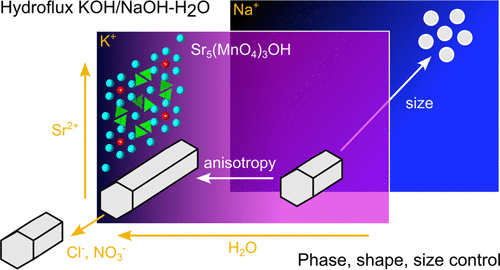
This work explores the use of hydrofluxes (alkali hydroxide mixtures with precisely controlled water content) as a powerful tool for the synthesis of rare pentavalent manganese (Mn5+) oxides. While these materials possess unique optical, magnetic, and redox properties, they have historically been difficult to design as shape-controlled crystals. This study demonstrates that by fine-tuning water and strontium content, it is possible to achieve rigorous control over phase speciation, crystal morphology, and nanostructure.
I am very grateful to have collaborated with such a talented team of researchers and appreciate the opportunity to contribute to this study.